
Wallowa Resources’ Origins
Wallowa Resources (WR) is a nonprofit organization based in Northeast Oregon, dedicated to empowering rural communities to create strong economies and healthy landscapes through land stewardship, education, and job creation.
In 1996, changes in national forest management caused most Wallowa County sawmills to shut down, leaving 20% of our counties’ workforce unemployed overnight. Wallowa Resources was founded directly in community response and action to our rapidly changing economy – the question being how do we put people back to work in meaningful ways to sustainably care for our landscapes?
Over the past 30 years, Wallowa Resources has worked to keep rural communities strong and landscapes healthy through our many community, regional, state and federal partnerships, and through our own programs in Forests, Noxious Weeds, Rangeland, Community Energy, Aquatic and Riparian Restoration, Monitoring, Workforce Development and Youth Education. Our mission and values are built on a Stewardship Economy Model – that we can align economic activity with long-term ecological health, local prosperity, and shared benefit, integrating land stewardship, community leadership, and economic development into a place-based system designed to work across generations.
Wallowa Resources’ Impact through STEM Education
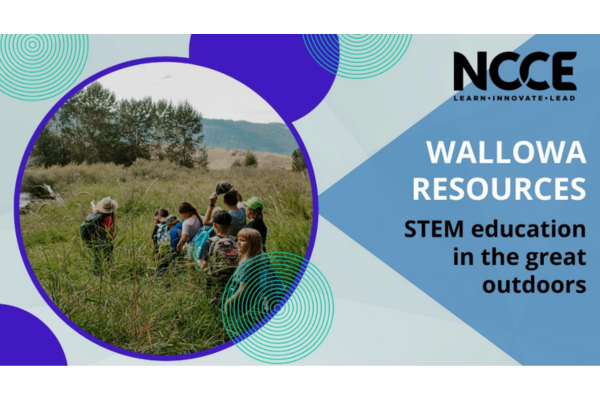
Wallowa Resources engages students in STEM primarily through our youth education program, Wallowa Mountain Institute (WMI). Our approach is rooted in place-based, experiential learning. We want kids to get outside, ask questions, be curious and explore science through the landscapes and natural resources that surround them every day. Our goal is not only to increase K-12 STEM learning opportunities and science literacy, but to help youth connect to and ultimately care about the place they call home – our beautiful and rugged working landscapes.
We do this through three main program areas: WREN, OWL, and HAWK, which together create a pathway for youth from elementary through high school.
WREN (Wallowa Resources Exploration of Nature) is our out-of-school program, with offerings for 2nd-10th graders. Each summer, we’re busy running nature day camps, wilderness hikes, camping trips, and backpacking expeditions. Each spring and fall, we teach a 7-week series of Friday science lessons and adventures for middle schoolers. Kids in our WREN programs cover a wide array of science topics such as ecology, wildlife biology, geology, and ethnobotany, as well as outdoor recreation topics like fishing, wilderness survival, and orienteering, and artistic expression in nature such as landscape painting, nature journaling, and poetry.
WREN is all about getting outside, getting your hands dirty, and connecting to nature through a positive, supportive community.
Our OWL (Outdoor Wallowa Learning) programs work directly with local schools. Each year, we provide Outdoor School for Wallowa County 4th–6th graders, where students spend a whole week outside, studying curriculum designed to complement that specific place.
For instance, kids learn about the salmon life cycle at Wallowa Lake State Park by watching the kokanee spawn just feet away, or learn how beavers create wetland habitat at a river restoration site littered with beaver signs.
We also provide field trips and classroom lessons throughout the school year and work with teachers to build programs around what their students are already learning.
These experiences give kids a chance to take concepts they may have first encountered in a classroom and actually see, touch, investigate, and experience them in a real world setting.
As students get older, we start connecting that STEM learning with future career options through HAWK, our workforce development program. Each summer, our paid high school interns work alongside natural resource professionals and learn about the wide variety of careers available in fields like forestry, fisheries, wildlife biology, botany, fire ecology, rangeland, noxious weeds, monitoring, and land management.
Instead of simply hearing that these careers exist, youth get to meet the people doing the work, ask questions, and participate in useful data collection and stewardship projects.
STEM Learning that is Unique to WR
One of the things that makes our STEM programming unique is that Wallowa Resources is actively doing natural resource and community development work throughout Northeast Oregon. As an organization, we work with numerous public, private, nonprofit, state, federal, and Tribal partners to get this important work done. With these connections, our youth programs often draw on the knowledge of foresters, biologists, restoration practitioners, monitoring specialists, land managers, Tribal partners, private landowners, and many others to bring their knowledge and expertise to kids of all ages.
We work with our partners the most through the HAWK program, but will bring in guest instructors to help us teach other programs too – for instance, we taught a fish biology themed Friday WREN lesson, and had fish biologists with Oregon Department of Fish and Wildlife come out and help the middle schoolers toss frozen steelhead into the Lostine River for nutrient enrichment.
This means that kids aren’t just learning about science in theory—they get to see how people are using science to understand and care for the landscapes around them.
Ultimately, we want STEM to feel relevant and accessible to rural kids. That’s why all of our programs are completely free of charge, we rely mainly on grants and some donations to fund our work. We also help kids participate by providing food and loaning out gear and outdoor clothing. Kids should feel safe and comfortable outdoors so they can be curious about what they see around them.
For us, STEM education is as much about building curiosity and connection to place as it is about teaching specific science concepts.
Best Practices Come First at Wallowa Resources
Our best practices for engaging students boils down to four main things: removing barriers, building community, place-based learning, and giving youth opportunities to lead. These themes show up across all of our programs, whether we are teaching a science lesson, taking kids backpacking, or working with high school interns.
To help kids feel safe and remove as many participation barriers as possible, all of our youth programs are free, and we provide wraparound supports including food, snacks, and transportation assistance as needed. We also have an outdoor gear and clothing library to loan out so that kids can always participate in overnight trips without needing to purchase their own equipment. In a rural, isolated community where access to resources are harder to come by, something as simple as not having a ride, a warm coat, or money for a program fee can determine whether a young person gets to participate at all.
Removing those barriers is the foundation for everything else we do.
We put a lot of emphasis on building community and creating a sense of belonging. Our overarching program model specifically incorporates belonging, trauma-informed teaching, and social and emotional learning. We intentionally make time for name games, team building, shared meals, group reflections, and sometimes just being silly together. Those things may not look like the “educational” part of a program, but they are the foundation, and often what makes the education possible.
Finally, we try to give youth real ownership of their experiences. That means asking for their feedback, giving them choices when we can, creating opportunities for reflection, and allowing older students to take on mentorship and leadership roles. As youth progress through our programs, we want the adults to increasingly step back giving students the opportunity to gain independence. When young people realize that their knowledge, ideas, and experiences are valuable to the group, the knowledge and experience they have gained never leaves them.
Underlying all of this is a simple philosophy: kids learn best when they feel like they belong, when they have some ownership over what they are doing, and when learning feels real. We try to create the conditions for those experiences and then give kids enough space to surprise us with what they can do.
Support for Wallowa Resources
If you would like to support Wallowa Resources or WMI, visit our websites www.wallowaresources.org and www.wallowainstitute.org.
There, you can learn more about what we do, sign up for our newsletter, or make a donation.
You can also follow us on Facebook or Instagram.
Written by Emily Bratcher
Wallowa Resources Youth Education Manager
Enterprise, Oregon
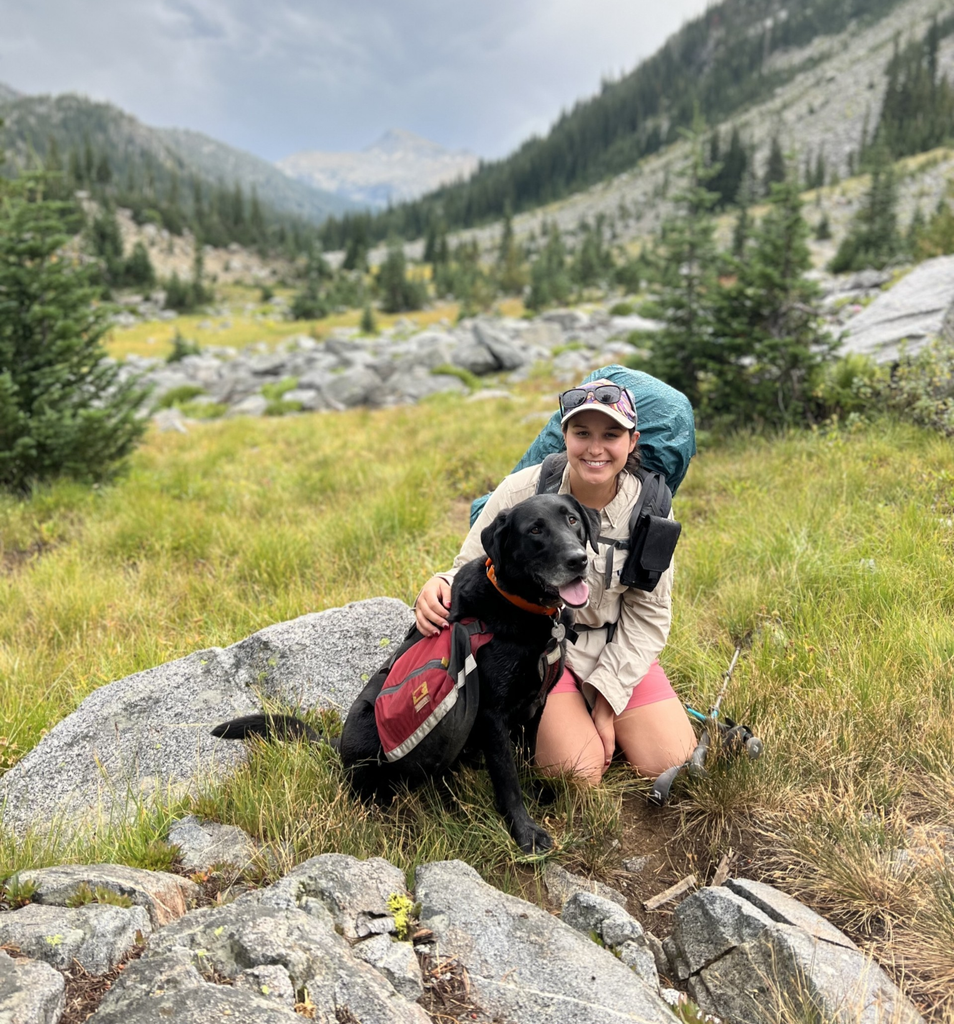
Emily grew up in Albany, Oregon in the Willamette Valley. She fell in love with Wallowa County at an early age while she spent many summers visiting her great-grandma in Enterprise. Determined to make this place her home, she moved to Enterprise permanently in 2016, working as a fish biologist for the state. Through her job, she had the occasional opportunity to participate in local outreach events, which sparked a passion for education. While she enjoyed working in fisheries, she decided to go back to school, earning her master’s in Environmental Education and Science Communication from the University of Idaho in 2020. She has been a part of the Wallowa Resources team for the last 6 years.
Stay in touch with NCCE by connecting with us! https://ncce.org/