

with Hayley Spohn, Experienced Educator at Federal Way Public Schools (WA), and Ryan Fries, ML Educator at Bellingham Public Schools (WA)
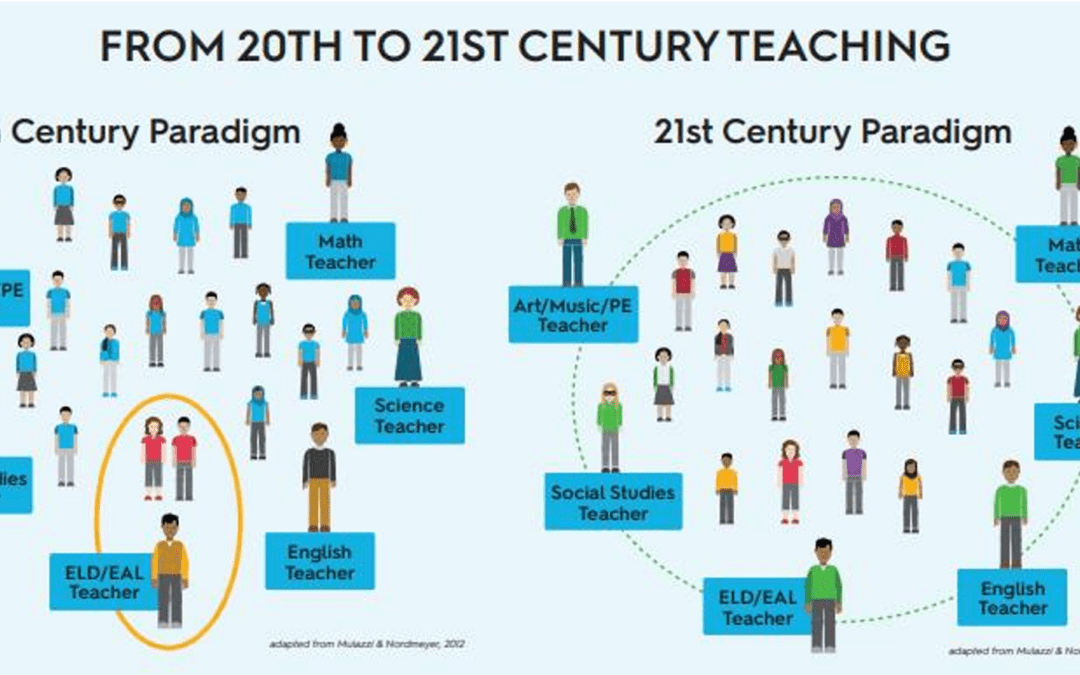
Today’s classrooms reflect extraordinary diversity. Within a single class, educators often support students across multiple grade-level reading abilities, multilingual learners at different stages of language development, and students with varied cognitive profiles. For educators, the question is: how do we build learning environments that support grade level access to all learners? Meanwhile, school and district leaders must ask themselves: how do we encourage inclusion and meaningful access for all students without placing unsustainable demands on teachers?
When it comes to facilitating access, two well-established instructional frameworks, Universal Design for Learning (UDL) and the Sheltered Instruction Observation Protocol (SIOP), offer clear guidance. UDL emphasizes reducing cognitive barriers through multiple means of representation, engagement, and action and expression. SIOP complements this work by focusing on linguistic access, including comprehensible input, explicit language objectives, and structured opportunities for academic language development. While UDL focuses on cognition, and SIOP focuses on language, there is tremendous overlap between these frameworks as there is a clear relationship between cognitive and linguistic development.
Recent classroom use cases demonstrate how AI-powered platforms such as Colleague AI can make integrating both frameworks more effective in practical and scalable ways.
From Aspirations to Actionable Design
Educators are frequently encouraged to design for “all students,” yet are rarely given concrete, time-efficient strategies to do so. In classrooms with large enrollments, wide reading-level ranges, and inclusive service models, designing accessible lessons can feel overwhelming.
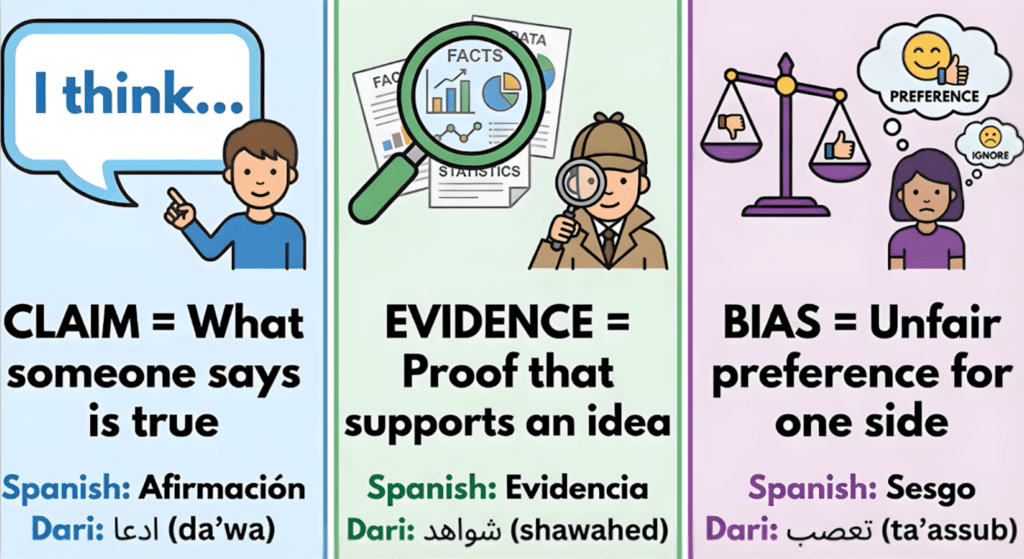
A common entry point is anchoring instruction around a shared artifact, such as an infographic. Infographics naturally support comprehension through visual structure, symbols, and concise text. When paired with UDL and SIOP strategies, they can support access to grade-level standards, including higher-order skills such as analyzing claims, evidence, and bias.
Colleague AI has been used in classrooms to support this early design stage by helping teachers articulate instructional context clearly. When educators describe their classroom composition, language proficiency levels, and learning goals, the platform generates suggestions aligned with UDL and SIOP rather than generic lesson ideas. This includes identifying likely barriers and proposing scaffolds before instruction begins.
Pre-Teaching Vocabulary and Building Linguistic Access
Intentional vocabulary preparation is one of the most effective supports for multilingual learners. In demonstrated classroom workflows, Colleague AI has been used to rapidly generate visual vocabulary cards, simplified definitions, translations into students’ home languages, and color-coded supports for key academic terms such as claim, evidence, and bias. These features simultaneously address UDL principles and SIOP components by offering visual, linguistic, and contextual scaffolds.
Crucially, these outputs do not replace teacher expertise. Educators review, adapt, and refine the materials. However, by reducing the time required to create foundational supports, teachers can focus more on instructional decision-making and responsive teaching.
Choice, Voice, and Multiple Pathways for Learning
UDL emphasizes learner choice in how students engage with content and demonstrate understanding. In practice, Colleague AI has been used to generate UDL-aligned choice boards that offer multiple pathways for students to analyze the same content. Students may sketch key ideas, discuss them with a partner using sentence frames, record oral explanations in one or more languages, or write short analytical responses.
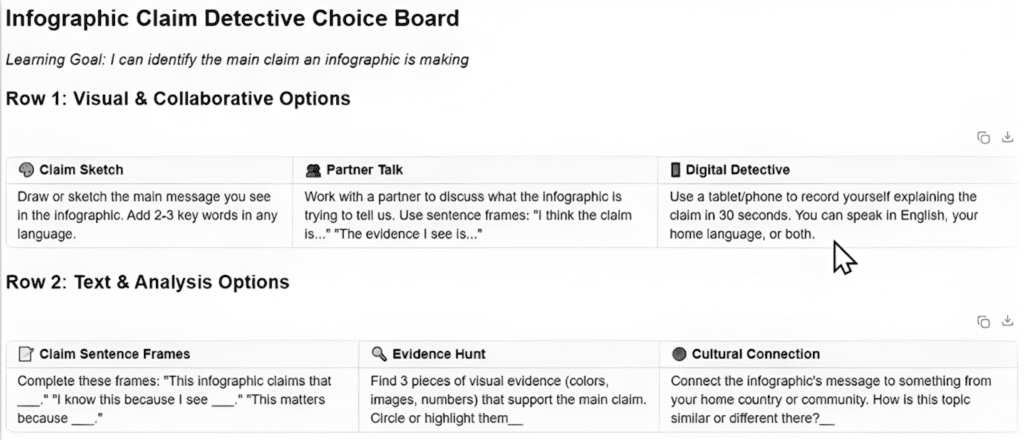
For multilingual learners, structured opportunities for speaking and listening are particularly valuable. Oral language development is a core component of language proficiency, yet it is difficult to assess consistently in large classes. AI-supported interactive activities allow students to practice authentic communication while providing teachers with formative evidence of understanding.
These options do more than accommodate differences. When students can choose an access point that feels achievable, engagement improves and task avoidance decreases. Access itself becomes a classroom management strategy.
Supporting Metacognition and Critical Thinking
A common concern about AI in education is that it may reduce critical thinking by offloading cognitive work. Classroom evidence suggests the opposite when AI is used to build access rather than replace reasoning. When students understand vocabulary, context, and task expectations, they are better positioned to engage in higher-order thinking.
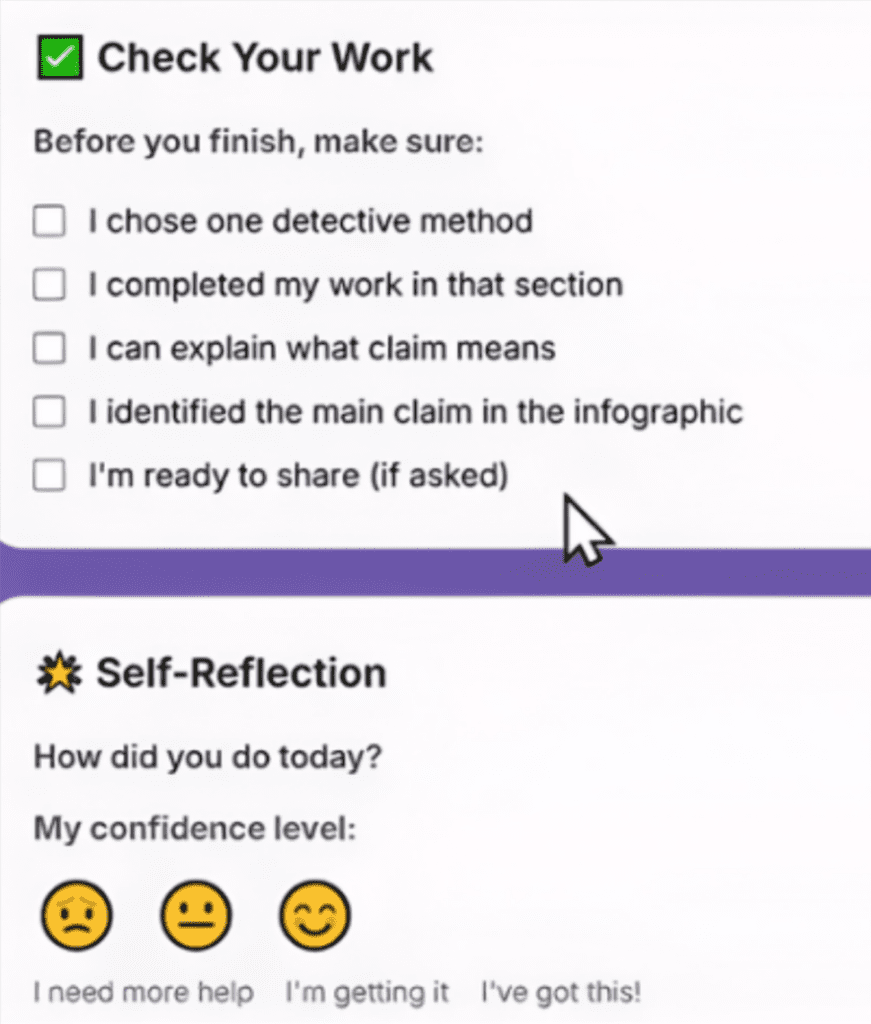
Colleague AI–supported lessons have been used to embed reflection prompts, confidence checks, and exit questions that encourage students to think about their thinking. These metacognitive supports help learners articulate what strategies helped them, what they learned, and what questions remain. For students who are often marginalized by text-heavy or language-dense instruction, this reflection can be especially empowering.
Reclaiming Teacher Time for Human-Centered Work
One of the most significant impacts of AI-supported UDL and SIOP design is how it redistributes teacher time. Creating interactive lessons, scaffolds, and formative assessments traditionally requires substantial preparation. By accelerating these processes, platforms like Colleague AI allow educators to reinvest time in high-impact practices such as conferencing with students, analyzing learning patterns, and building relationships.
This shift has implications beyond instruction. Reducing after-hours planning and weekend work supports teacher sustainability and well-being. For school and district leaders, this represents not only an instructional benefit but also a workforce retention strategy.
Implications for Schools and District Leaders
For administrators and instructional leaders, the takeaway is clear. AI should not be positioned as a replacement for professional judgment, but as an amplifier of evidence-based practice. When aligned intentionally with UDL and SIOP, AI tools can help schools move from aspirational language about equity and access to concrete, repeatable instructional design.
Effective implementation requires professional learning that deepens educators’ understanding of both instructional frameworks and responsible AI use. Tool selection also matters. Platforms grounded in educational research, such as Colleague AI, are better positioned to support authentic teaching and learning than generic productivity tools.
Access is not an add-on. It is the foundation of effective instruction. When UDL, SIOP, and thoughtfully designed AI tools work together, providing access for every learner becomes not only possible, but sustainable.
Join Collegue AI at NCCE26
SESSION
Driving Decisions with Data: Your District at a Glance
Thursday, February 26, 8:00 am–8:50 am
References
CAST. (2018). Universal Design for Learning guidelines version 2.2. http://udlguidelines.cast.org
Echevarria, J., Vogt, M. E., & Short, D. J. (2017). Making content comprehensible for English learners: The SIOP model (5th ed.). Pearson.
Meyer, A., Rose, D. H., & Gordon, D. (2014). Universal Design for Learning: Theory and practice. CAST Professional Publishing.Washington Office of the Superintendent of Public Instruction. “ME Info Session 01.09.25.”OSPI, 9 Jan. 2025, ospi.k12.wa.us/sites/default/files/2025-02/meinfosession010925.pdf.